
Heat resistance of motor winding insulation.
Heat resistance is one of the most important qualities of electrical insulating materials, as it determines the permissible load of electrical machines and apparatus. The ability of electrical insulating materials to withstand, without harming them, the effects of elevated temperature as well as sudden temperature changes is called heat resistance. It is necessary to know that as the temperature of electric motor windings rises above permissible values, the service life of the insulation is sharply reduced. Therefore, the heat resistance of insulation is the main requirement determining the reliability of operation and service life of the electric machine, which should be 15-20 years.
Insulation
Electrical insulation (EI) is an element of equipment construction that prevents electric current from passing through it. Materials with dielectric properties are used for insulation: glass, ceramics, numerous polymers, mica.
Main characteristics:
-
Dielectric permittivity. It determines the strength of interaction of point charges located in a homogeneous insulating medium at a distance from each other.
-
Mechanical strength. It is the resistance of the material to mechanical stress. In electrical machines, insulation is subjected to various stresses, especially at high rotational speeds.
-
Temperature resistance. Determines how well the insulation retains its properties under different temperature conditions. This is critical because machines can get hot during operation.
-
Moisture resistance. This is the insulation's ability to retain its properties in high humidity conditions.
-
Loss rate. Tangent delta. Determines the ratio of active power (losses) to reactive power in the dielectric. This ratio allows the quality of the insulation to be assessed.
Main insulation is the outer insulation of the coil, insulating it from the walls of the grooves in the cores (slot/groove insulation) and from other metal parts of the machine (mainwall insulation). The purpose of the main insulation is to separate the conductors from the iron of the machine or the magnetic core. The main insulation is followed by cover insulation, which protects the main insulation from mechanical damage.[1]
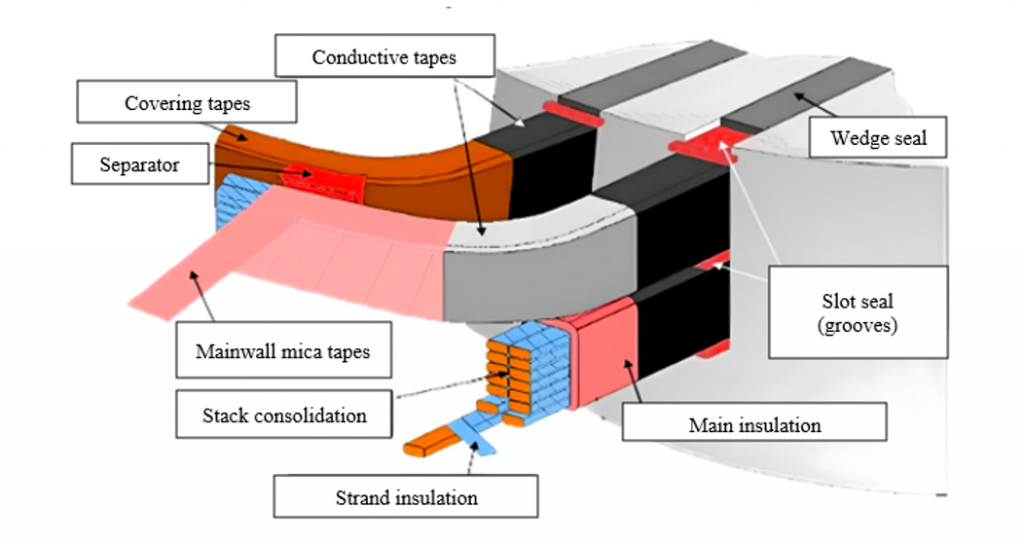
Figure 1 [2]
It is worth mentioning that there are different technologies of winding production. Rem&Coil uses Flat Coil technology, which differs from the classical method of insulation application. The peculiarity of Flat Coil is that the insulation is applied to the winding blank before the moulding stage. The main advantage of Flat Coil technology is the possibility to use automated machines at the stage of winding insulation application.
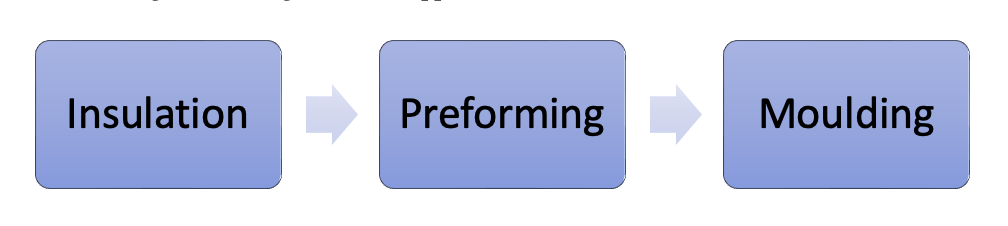
Figure 2
Insulation classification: temperature class
The service life of electrical machines depends to a large extent on the condition of the stator winding insulation. Damage to the winding insulation leads to short circuits, which account for more than three quarters of all electrical equipment failures.
In addition to natural ageing, moistening and contamination of the winding, the causes of damage include long-term excessive temperature conditions that do not meet the requirements of operation, as a result of which the insulation strength drops sharply. Therefore, heat resistance classes are adopted to assess the temperature resistance of electrical insulation.
Windings are the least heat-resistant part of the motor structure. Therefore, the operating temperature limit of the whole device is determined by the temperature at which they burn out.
The following classes of winding insulation heat resistance are distinguished:
-
Y (maximum temperature - 90 degrees Celsius). Windings are made of paper or natural fabrics without additional insulation impregnation;
-
A (maximum temperature - 105 degrees Celsius). Wraps are made of paper or natural fabrics with additional insulating impregnation;
-
E (maximum temperature 120 degrees Celsius). Wraps made of organic film of synthetic origin;
-
B (maximum temperature 130 degrees Celsius). Windings made of glass fibre or mineral compositions;
-
F (maximum temperature 155 degrees Celsius). F (maximum temperature - 155 degrees Celsius); F (maximum temperature - 155 degrees Celsius); F (maximum temperature - 155 degrees Celsius); F (maximum temperature - 155 degrees Celsius);
-
H (maximum temperature 180 degrees Celsius). Fibreglass or mineral wrap with organosilicon binder impregnation;
-
C (maximum temperature from 180 degrees Celsius). Wraps made of heat resistant materials with or without inorganic binder impregnation.
|
Insulation class |
Y |
A |
E |
B |
F |
H |
C |
|
Temperature limit for continuous operation, ℃
|
90 |
105 |
120 |
130 |
155 |
180 |
more 180 |
Table 1
Electric machines with class A insulation are practically not manufactured, and class E insulation is of limited use in low-power machines. Class B and F insulation is mainly used, and in special machines operating under severe conditions (metallurgy, mining equipment, transport) - class H and C. As a result of use of more heat-resistant materials, improvement of properties of electrical steels and improvement of constructions for the last 60-70 years it was possible to reduce the weight of electric machines in 2,5-3 times.
|
Heat resistance class |
Heat resistance temperature of class, °С |
Electrical insulating materials corresponding to heat resistance class |
|
Y |
90 |
Textile and paper materials made of cotton, natural silk, cellulose and polyamides (ribbons, paper, cardboard, fibre), wood and plastics with organic fillers |
|
A |
105 |
Fibrous materials of cellulose or silk impregnated or immersed in liquid electrical insulating material, and other materials and combinations of materials corresponding to this class. In fact, class Y materials impregnated with insulating compound or immersed in liquid dielectrics (natural resins, oil, asphalt, ethercellulose varnishes, transformer oil, thermoplastic compounds); lacquer fabrics, insulating tapes, lacquer papers, electric cardboard, getinax, textolite, impregnated wood, wood laminates, some synthetic films, wire insulation (PBD, PEVLO, PELSHO, etc.) made of cotton cloth, silk and lavsan, enamel wire insulation (PEL PEM PELR and PEVD, etc.). ) made of cotton fabric, silk and lavsan, enamel wire insulation (PEL PEM PELR and PEVD, etc.); |
|
E |
120 |
Some synthetic organic films, as well as other materials and combinations of materials corresponding to this class, some lacquer fabrics based on synthetic varnishes, thermosetting synthetic resins and compounds (epoxy, polyester, polyurethane, wire insulation of PLD, PEPLO types made of lavsan, enamel wire insulation of PEVTL, PETV, etc. based on polyurethane and polyamide resins); |
|
B |
130 |
Materials based on mica (including on organic substrates), asbestos and glass fibre, used with organic binders and impregnating compounds, as well as other materials and combinations of materials corresponding to this class. materials based on mica (micanites, micalents, mica-doplast, mica-doplast), glass fibres (glass fabrics, glass lacquers), asbestos fibres (yarn, paper, fabrics) with paper, fabric or organic substrate; film-glass plastic «Isoflex»; plastics with inorganic filler; laminates on the basis of glass fibre and asbestos materials; thermosetting synthetic compounds; enamel insulation of wires of PETV, PETVP, etc., on the basis of polyester varnishes, etc. based on polyester varnishes and thermoplastic resins. Impregnating compositions are bitumen-oil-resin varnishes based on natural and synthetic resins; |
|
F |
155 |
Mica and glass fibre based materials used in combination with synthetic binders and impregnating compounds, and other materials and combinations of materials corresponding to this class. In fact, the materials specified in class B are made of mica and glass fibre, but without substrate or with inorganic substrate; film-glass plastic «Imidoflex», glass fibre and asbestos insulation of wires of types PSD, PSDT, as well as enamel insulation of wires of types PET-155, PETP-155 on the basis of capron. Impregnating compositions are heat-resistant synthetic varnishes and resins; |
|
H |
180 |
Mica and glass fibre based materials used in combination with organosilicon binders and impregnating compounds, silicon organic elastomers, and other materials and combinations of materials corresponding to this class. Materials of mica and glass fibre without substrate or with inorganic substrate, silicon-organic elastomers, glass fibre insulation of wires of types PSDK, PSDKT, enamel insulation of wires of types PET-200, PETP-200, etc., based on silicon-organic varnishes; impregnating compositions are silicon-organic varnishes and resins. |
|
C |
more 180 |
Mica, ceramic materials, glass, quartz used without bonding compositions or with inorganic bonding compositions, and other materials and combinations of materials corresponding to this class. |
Table 2
Types of insulation materials
For long-term use of insulation, it is necessary to contact proven and reliable winding contractors and purchase quality materials. Electric motor manufacturers and repair organisations can turn to the Russian plant Rem&Coil, which since 2006 has been producing any type of sections as well as stator winding rods for AC and DC electric motors and generators. Due to the perfect geometry, section laying will take 1-2 days. And in production we use only high quality copper of M0 and M00 grades, and insulation of F, H, C heat resistance classes of leading world manufacturers.
Types of insulation materials used at Rem&Coil plant
ELECTRICAL INSULATING TAPES FOR RESIN RICH TECHNOLOGY
- Elmikatherm 524019
Mica tape consisting of PET film, mica paper, glass substrate. Mica content not less than 40 %. Heat resistance class F(155°C).
- Elmikatherm 52409
Mica tape consisting of mica paper, glass substrate. Mica content of at least 50%. Heat resistance class F(155°C).
- Elmikatherm 529029
Mica tape consisting of polyimide film, mica paper, glass substrate. The mica content is at least 35%. It is used for manufacturing sections of asynchronous motor stator winding for traction electric machines. Heat resistance class H(180°C).
- Elmikatherm 525029
Mica tape consisting of polyimide film, mica paper, glass substrate. The mica content is at least 35%. It is used for manufacturing of stator winding sections of three-phase asynchronous motor stator winding for traction electric machines. Heat resistance class C (200°C).
ELECTRICAL INSULATING TAPES FOR VPI TECHNOLOGY
- Elmikapor 523119
Mica tape consisting of PET film, mica paper, glass substrate. The mica content is at least 60%. Heat resistance class F(155°C).
- Elmicapor 523199
Mica tape consisting of mica paper, glass substrate. Mica content of at least 50%. Heat resistance class F(155°C).
- Elmikapor 53319
Mica tape consisting of mica paper, glass substrate. Mica content of at least 80%. Heat resistance class F(155°C).
- Elmicapor 525029
Mica tape consisting of polyimide film, mica paper, glass substrate. The mica content is at least 35%. Used for manufacturing sections for traction electric machines. Heat resistance class H/C (180 - 200°C).
PROTECTING TAPES
- Glass fibre tape LES
Designed for protection of body insulation from mechanical influences.
- LPP-400
Designed to protect the case insulation from external partial discharges in groove parts.
Temperature operation mode of electric motors
Normal values of ambient temperature at which the electric motor operates with rated power are determined by the climatic version of the electric motor. Thus, machines with N1 and F1 version are designed for operation at ambient temperature up to +40 degrees Celsius, N3 and T2 - up to +45 degrees Celsius, T1 - up to +50 degrees Celsius. If the ambient temperature exceeds this parameter and it is not possible to organise cooling, it is necessary to reduce the load on the used electric motor[3].
For temperature control, the supply voltage must be monitored. If the voltage drops to 95% of the nominal voltage or lower, the motor is supplied with increased current, which leads to overheating of the device. The same phenomenon is observed when the voltage rises to 110% and above of the nominal voltage, as eddy currents cause the stator to heat up.
According to statistics, the life of the insulation when the temperature rises 8 degrees above the permissible limit halves its operating period. Therefore, in order to maintain the performance of the machine, it is worthwhile to find out the permissible operating temperature, avoid overheating and avoid exceeding (or reducing) current loads.
Temperature exceedances under the above conditions (gaseous cooling medium temperature of 40 °C and altitude not exceeding 1000 m above sea level) must not exceed the values given in Table 3 (for air cooling) or Table 4 (for hydrogen cooling). For other on-site operating conditions for typical modes other than S1 and for nominal machine voltages above 12000 V, the tolerance limits must be adjusted according to GOST R 52776-2007 (IEC 60034-1-2004).
|
Electrical machine part |
Heat resistance class |
|||||||||
|
130 (B) |
155 (F) |
180 (Н) |
||||||||
|
Measuring method |
||||||||||
|
thermometer |
resistance |
embedded thermal sensors |
thermometer |
resistance |
embedded thermal sensors |
thermometer |
resistance |
embedded thermal sensors |
||
|
1а) AC windings of machines with a capacity of at least 5000 kW (kV-A) |
- |
80 |
85 |
- |
105 |
110 |
- |
125 |
130 |
|
|
1b) AC windings of machines with a capacity of more than 200 kW (kV-A) but less than 5000 kW (kV-A) |
- |
80 |
90 |
- |
105 |
115 |
- |
125 |
135(1)) |
|
|
1c) AC windings of machines not exceeding 200 kW (kV-A), except those specified in 1d) or 1e) |
- |
80 |
- |
- |
105 |
- |
- |
125 |
- |
|
|
1d) AC windings of machines not exceeding 600 W (V-A) |
- |
85 |
- |
- |
110 |
- |
- |
130 |
- |
|
|
1e) AC windings of fanless free-cooled machines (IC40) and/or encapsulated windings |
- |
85 |
- |
- |
110 |
- |
- |
130 |
- |
|
|
2 Armature windings with collectors |
70 |
80 |
- |
85 |
105 |
- |
105 |
125 |
- |
|
|
3 Field windings of AC and DC machines other than those specified in section 4 |
70 |
80 |
- |
85 |
105 |
- |
105 |
125 |
- |
|
|
4а) DC field windings of synchronous machines laid in the grooves of cylindrical rotors, except synchronised induction motors |
- |
90 |
- |
- |
110 |
- |
- |
135 |
- |
|
|
4b) Insulated fixed field windings of DC machines having more than one layer |
70 |
80 |
90 |
85 |
105 |
110 |
105 |
125 |
135 |
|
|
4c) Low resistance field windings of AC and DC machines with more than one layer and compensation windings of DC machines |
80 |
80 |
- |
100 |
100 |
- |
125 |
125 |
- |
|
|
4d) Single-layer AC and DC machine windings with bare or varnished metal surfaces and single-layer DC machine compensation windings |
90 |
90 |
- |
110 |
110 |
- |
135 |
135 |
- |
|
|
5 Magnetic cores and other structural elements in contact with insulated windings |
80 |
- |
90 |
105 |
- |
110 |
125 |
- |
135 |
|
|
1) For high-voltage alternating current windings, the corrections in accordance with item 4 of Table 4. 2) Where the superimposition method is applied in the tests to windings of machines of rated power not exceeding 200 kW (kV-A) or less with insulation of classes 130 (B) and 155 (F), the temperature exceedance limits given for the resistance method may be increased by 5 K. 3) This also includes multilayer windings so that each of the lower layers is in contact with a circulating primary cooling medium. |
||||||||||
Table 3 - Maximum permissible temperature exceedances (K) of machines with indirect air-cooled windings
|
Electrical machine part |
Heat resistance class |
|||
|
130 (В) |
155 (F) |
|||
|
Measuring method |
||||
|
resistance |
embedded thermal sensors |
resistance |
embedded thermal sensors |
|
|
1 AC windings of machines of at least 5000 kW (kV-A) or with a core length of at least 1 m at absolute hydrogen pressure |
||||
|
up to 150 kPa (1.5 bar) |
- |
85 |
- |
105 |
|
150 kPa " 200 kPa " (2.0 bar) |
- |
80 |
- |
100 |
|
" 200 kPa " 300 kPa " (3.0 bar) |
- |
78 |
- |
98 |
|
" 300 kPa " 400 kPa " (4.0 bar) |
- |
73 |
- |
93 |
|
" 400 kPa |
- |
70 |
- |
90 |
|
2а) AC windings of machines of less than 5000 kW (kV-A) or with a core length of less than 1 m |
80 |
85 |
100 |
110 |
|
2b) Excitation windings of AC and DC machines other than those specified in points 3, 4a, 4b |
80 |
- |
105 |
- |
|
3 Excitation windings of implicitly pole machines with DC excitation |
85 |
- |
105 |
- |
|
4а) Low resistance multilayer field windings and compensation windings |
80 |
- |
100 |
- |
|
4b) Single layer windings with bare or varnished metal surfaces |
90 |
- |
110 |
- |
|
5 Magnetic cores and other structural elements in contact with insulated windings |
- |
85 |
- |
105 |
|
1) For high voltage AC windings, corrections according to item 4 of Table 9 of GOST R 52776- 2007 (IEC 60034-1- 2004). 2) The permissible excess temperature depends on the hydrogen pressure. 3) It also includes multilayer windings designed so that each of the lower layers is in contact with the circulating primary cooling medium. |
||||
Table 4 - Maximum allowable temperature exceedances (K) of machines with indirect hydrogen cooling of windings
The ambient air temperature at which a general industrial electric motor can operate at rated power is considered to be 40ºC. If the ambient temperature is higher or lower than +40 for the general industrial version of the electric motor, the standard allows certain modifications of the permissible temperature exceedances.
|
! |
When the ambient air temperature rises above 40ºC, the load on the electric motor must be reduced so that the temperature of its individual parts does not exceed the permissible values. When the machine is operated in mountainous areas where the heat dissipation is impaired due to lower atmospheric pressure, the standard provides for some reduction of permissible temperature exceedances. |
Regardless of the decrease in ambient temperature, it is not allowed to increase the current loads by more than 10% of the rated current. With induction motors, this can be affected by changes in the supply voltage; as the supply voltage decreases, the power at the motor shaft squared decreases and, in addition, a voltage decrease below 95% of the nominal voltage leads to a significant increase in motor current and heating of the windings. Increase in voltage above 110% of rated voltage also leads to increase in motor winding current, stator heating due to eddy currents increases.
As the temperature rises, many of the materials begin to char and become conductive. All materials become brittle from prolonged exposure to elevated temperatures long before charring, easily break down and lose their insulating properties. This process is called thermal ageing. Experience shows that an increase in insulation temperature by 10 °C reduces its service life by about half. Thus, for class A insulation, increasing the temperature from 95 to 105 °C reduces its service life from 15 to 8 years, and heating to 120 °C reduces it to two years. This phenomenon is based on the general law of dependence of chemical reaction rate on temperature, described by the Van't Goff equation.
Technological overloads of working machines or voltage fluctuations in the supply network lead to an increase in the current in the windings of machines and exceed the temperature of the windings above the permissible for this class, as a result, the service life of machines is quickly reduced.
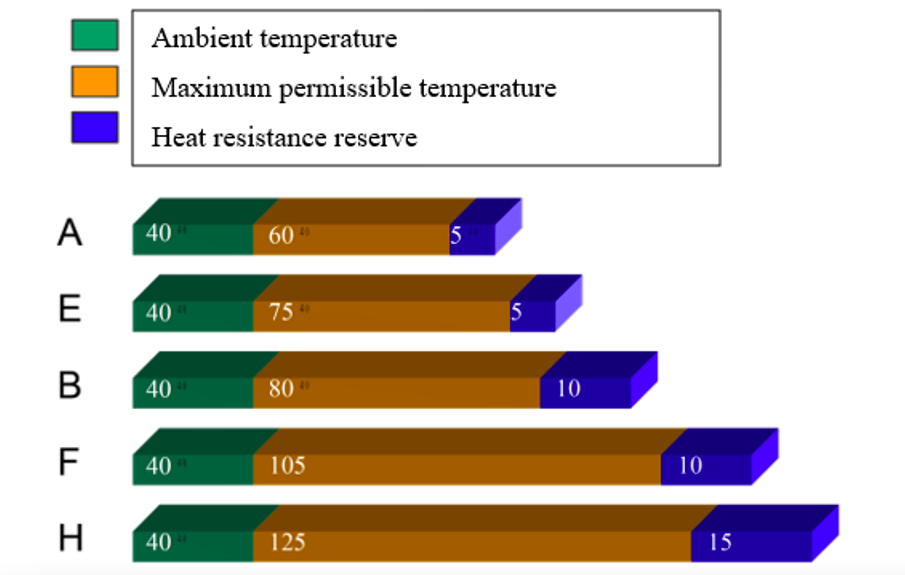
Temperature is the most important factor affecting the service life of a motor. If the operating temperature constantly exceeds the operating limit temperature of the insulation material, the insulation deteriorates faster. This accelerated ageing process significantly reduces the service life of the motor. Maintaining the motor operating temperature within the specified limits is therefore essential to ensure longevity and reliable operation.
More details on testing:
Organisation Standard 34.01-23.1-001-2017 - https://stds.ru/document/%D0%A1%D0%A2%D0%9E%2034.01-23.1-001-2017.pdf
Useful materials on insulation and sections:
https://drive.google.com/drive/u/2/folders/1OuvG0IJ7v6ntdjSMA24-2AyfjrEa_r2G
Sources:
https://elmashinspb.ru/wp-content/uploads/2021/08/Osnovy-ispytaniya-elektrodvigatelej.pdf
[1] The cover insulation protects not only against mechanical damage, but also against moist external environment (Eliflex 19), against partial discharges - anti-corona/conductive tape (LPP-400 + LPP-1000). Everything depends on the tapes applied.
[2] Consolidation = сoncatenation
[3] Climatic version: N - temperate macroclimatic area; F - cold macroclimatic area; NF - combination of temperate and cold macroclimatic areas; T - tropical macroclimatic area; U - general land area, excluding areas with very low temperatures; M - macroclimatic area with moderately cold maritime climate; B - all areas of the globe, excluding parts of the earth with very low temperatures (e.g. Antarctica). https://relsib.com/uploads/tiny/documents/gost_15150_69_klimat_ispolneniya.pdf